

Reading Aloud
Not as scary as it sounds

Literacy rates have never been higher, historically. Most of us learn to read by age 5 or 6. Whether you’ve been taught by a parent, a schoolteacher, a talking hand covered in felt called a Muppet, learning to read is a basic and essential part of the human experience.
So why does reading out loud in front of others confound so many otherwise intelligent people?
As an author of any style – poetry, prose, essays, non-fiction, monthly sales reports even count – you will at some point be asked to read your work aloud. For many people, most if we’re honest, this is a terrifying prospect and one that results in a loss of motor function near the lips and tongue and can raise heart rates to dangerous levels as well as bring on perspiration to the same level of moisture as a dance marathon in Death Valley.
But why? You wrote this stuff! These are your words. Why do they suddenly sound like a foreign language in your mouth?
Many writers, most if we’re honest, never practice or take the time to learn how to speak in public. You surely read something everyday. News articles, text messages, lewd bathroom graffiti. Words surround us and we interpret these squiggly lines and suss out their meaning a hundred times a day. All in our heads.
Moving from your brain the relatively short distance to the mouth is where some kind of disconnect occurs. Words become meaningless, nonsensical scribbles drawn by a two-year-old after a bag full of Skittles and not enough Ritalin. Words we labored over and reevaluated during revisions and edits are now the rantings of an imbecile deep in the basement level of the most dilapidated insane asylum.
A microphone seems as if it just begging to be called phallic, when in fact many, most if we’re being honest, see it more like a gun pointed at their face when asked to use it for its intended purpose – to amplify our voices.
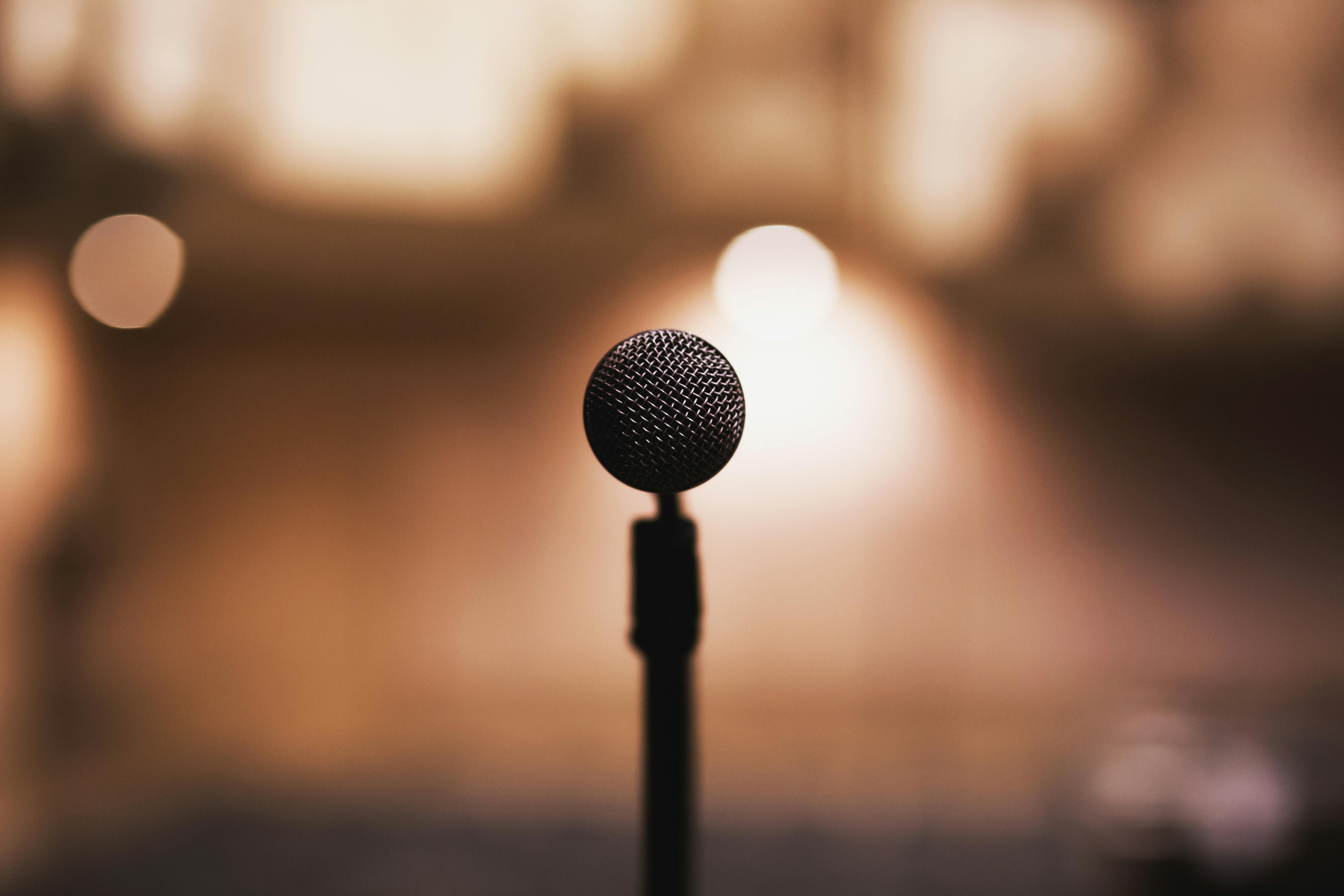
And oh, those voices. Squeaky, gravelly, nasaly, too loud, too soft, heavy with the telltale vowels of the place where you were born. Humans are pre-wired to respond to our mother’s voice, to the cries of our children, and also to despise the sound of our own idiotic cartoon mouse of a voice.
Accents we have no control over can make us sound uneducated or snobby or itching for a fight. I know you don’t have an accent, but you know the type. The kind that’s strong enough you immediately know what sports team they root for.
Who are these magicians who can step up to a microphone, confidently remove it from the stand and start pontificating with nary an “Um” or an “Uh” between words? Sociopaths, that’s who. Stalking the stage during their Ted Talk like they belong up there. How dare they?
But I’m here to tell you, YOU can be one of those psychos.
When asked to read, don’t shy away. Don’t demure and claim you have to go to your sister’s wedding that weekend when we all know very well that your sister lives alone with a cat and a family of raccoons that visit every night to let her feed them Meow Mix from the palm of her hand and who will proudly tell anyone that she only got ringworm once.
Instead, practice reading aloud. Read into the mirror for an audience of one. Slowly graduate to a lineup of your Beanie Babies who used to line the windowsill in your bedroom but now live in a sealed plastic bin under the mattress waiting for markets to swing upward again. Get used to eyes on you. Cut out eyes from magazines and tape them to your walls. Become oblivious to being observed. But please take the cut-out eyes down before bringing any Tinder dates home.
Listen to the greats do it. Thrill to David Sedaris’ unique Carolina-via-NY gay bar voice. Marvel at Sara Vowell’s lateral lisp and realize your voice isn’t that weird. Embrace the weirdness in every voice. Truman Capote sounds like Mel Blanc voicing an animated hedgehog. Winston Churchill sounds like the concierge of a hotel that’s haunted. Barack Obama sounds like a tour guide at Colonial Williamsburg who’s trying to keep it cool and relevant for the kids.
It’s not about your voice, it’s about how you present yourself and your words. And if the words are good enough, half your job is done already.
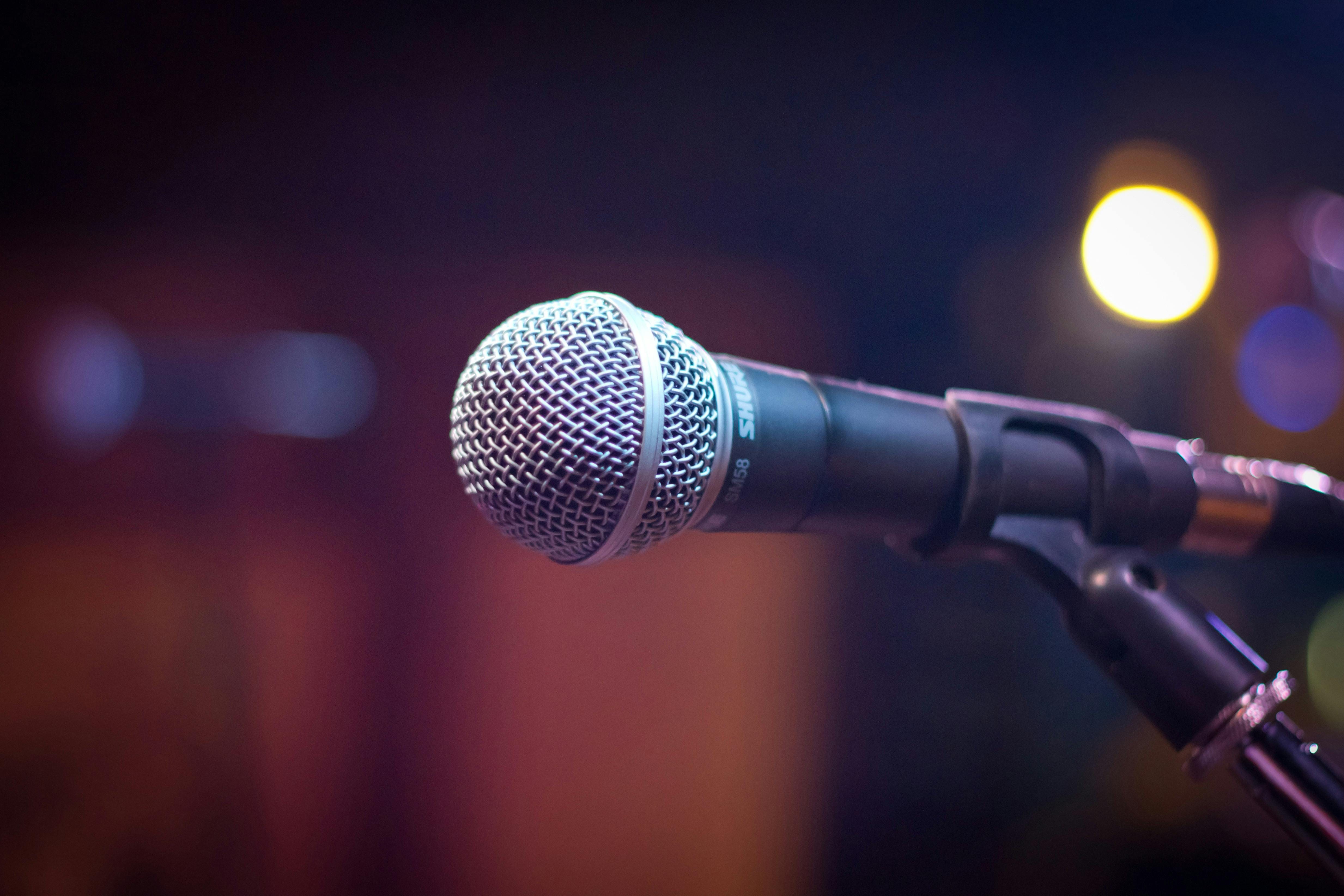
Step up to the mic. Don’t let it intimidate you. If it were an actual gun, yes maybe don’t get that close. But it’s not. A microphone has never killed anyone. (Ok, yes, I know there have been several documented cases of people being electrocuted by microphones, but you know what I mean. Try not to do a poetry reading standing in three inches of water, how about that?)
Then deliver the performance you have practiced. That you’ve gone over at least a dozen times. Out loud, not in your head. We can’t all join you in there and isn’t that for the best?
Picture yourself around the campfire, entertaining in a world before TV or cell phones, before recorded music or even the printed word. That’s what live reading is. It’s time travel. It’s the most basic human form of communicating. It’s inside all of us to do it as naturally as breathing.
So when you feel that fear, think about what your ancestors had to think about when they were telling a story out loud. Nearby bears, marauding hordes, now that the sun has gone away, will it come back again or do we need to sacrifice another virgin?
You sweating in front of a small crowd of people on a Tuesday night at the Barnes & Noble doesn’t seem to bad.
You can conquer the fear and a whole lot of people, most if we’re honest, will be impressed.
No matter how many times I’ve done it, it never gets easier.
Great advice!